
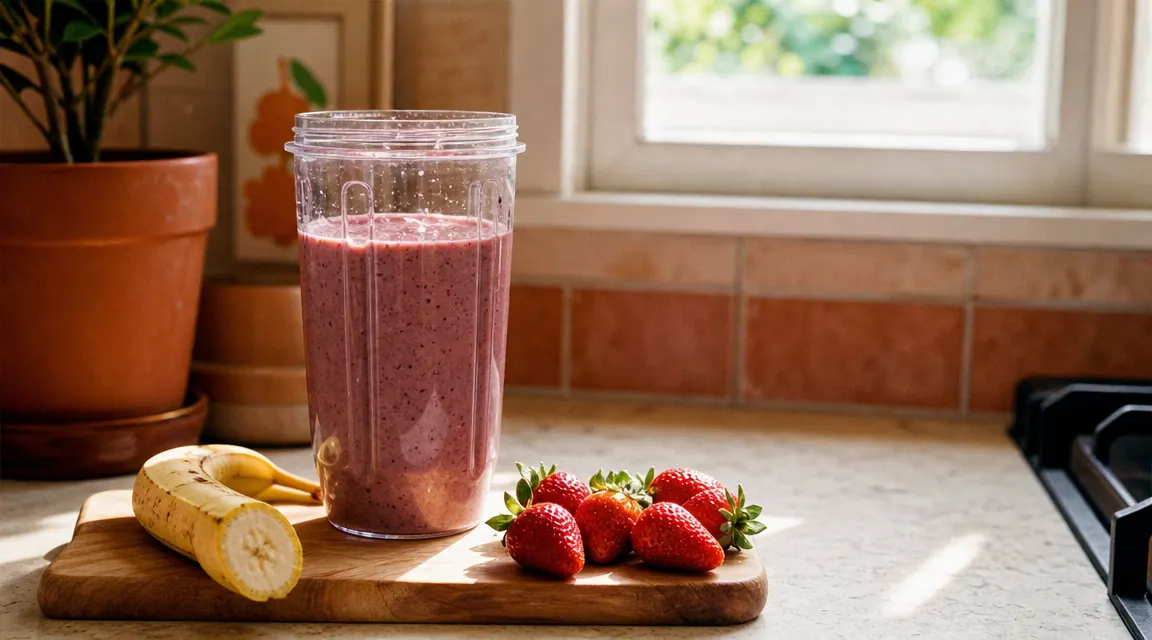
My kitchen is the kind where you stand in one spot and can touch the refrigerator, the stove, and the sink without moving your feet. I have made smoothies in this kitchen for three years, and for the first several months, most of them were disappointing. Watery at the top. A frozen strawberry lump sitting defiantly at the bottom. Or a warm, thin concoction that tasted like diluted yogurt. The problem was not the blender. I was using the Magic Bullet 11-Piece Set, which has 119,000-plus reviews on Amazon for a reason. The problem was that I was loading it wrong and using the wrong ratios, and nobody had ever told me the specific mechanics of how a personal-cup blender actually works.
A personal blender is not a scaled-down version of a countertop blender. The blade sits at the top of the cup when it is inverted onto the motor base, so it pulls ingredients down through the center instead of pushing up from the bottom. That one fact changes everything about how you should load it, in what order, and how much liquid to add. Once I understood the mechanics, my smoothies improved immediately. The five steps below are what I follow every morning now, in a kitchen with about fourteen inches of usable counter space.
If your smoothies keep coming out chunky, a different blender is not the answer. The Magic Bullet 11-Piece Set handles frozen fruit just fine when you load it correctly.
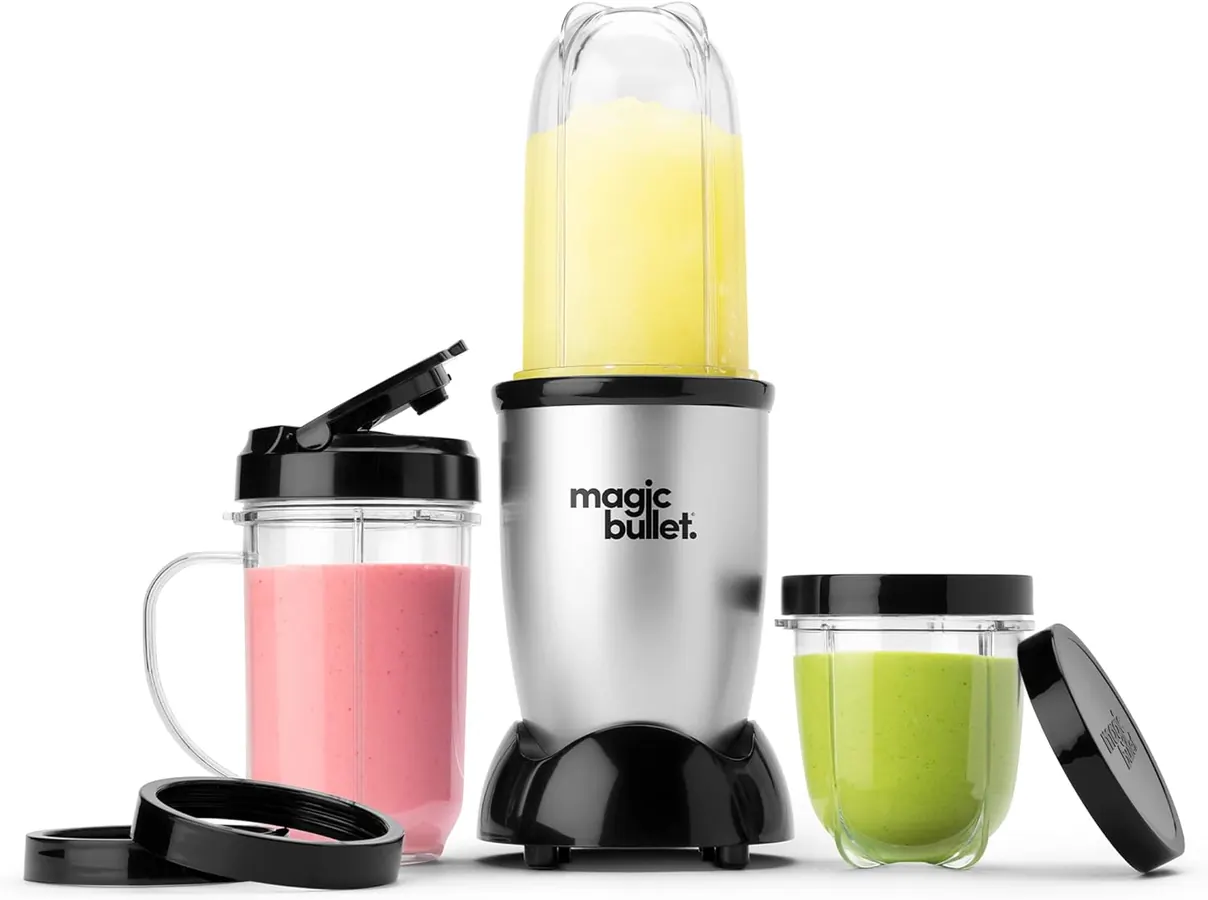
It holds 11 pieces including two cup sizes, two to-go lids, and a blade set, and it stores in about four inches of cabinet width. Check the current price before buying.
Amazon Check Today's Price on Amazon →Step 1: Start With Liquid, Not Fruit
This is the step most people skip, and it is the reason most personal blender smoothies fail. Because the blade sits at the top of the inverted cup, the liquid needs to be at the bottom, which means it gets added first. When you flip the loaded cup onto the motor base, the liquid sits closest to the blade and creates the initial vortex that pulls the harder ingredients down into it.
The right amount of liquid for the Magic Bullet's tall cup (18 oz) is between a third and a half cup for a thick smoothie, or up to three-quarters of a cup if you prefer something more drinkable. Almond milk, oat milk, and coconut water all work well. Plain water works fine and keeps calories low. Juice works but adds sugar quickly. I prefer unsweetened almond milk for most mornings. Pour the liquid in first, before anything else.
If you add fruit first and liquid last, the liquid sits on top of the pile. When the blender runs, the blade has nothing to grab right away and the motor strains against the dry mass underneath it. This is how you get that grinding, labored sound and the chunks that survive the whole blend cycle.
Step 2: Add Soft Ingredients Next
After the liquid, add anything soft: fresh fruit, fresh greens, yogurt, nut butter, protein powder, honey, chia seeds. These go in after the liquid but before the frozen ingredients. Spinach and kale are excellent here. A handful of spinach, maybe an ounce and a half, blends completely invisible in a fruit smoothie and you will not taste it at all. The Magic Bullet handles greens very well at this step, because they are sitting in liquid and get pulled into the blade vortex immediately.
If you are using Greek yogurt for thickness and protein, add it here, about a quarter cup. Nut butters go in now too, a tablespoon at most. More than that and the fat can interfere with the blending action on dense frozen fruit. A tablespoon of almond butter in a smoothie gives you flavor and staying power without causing problems.
Step 3: Frozen Fruit Goes in Last, and Use Less Than You Think
The single biggest smoothie mistake I see is too much frozen fruit. People fill the cup to the brim with frozen mango or strawberries, add a splash of liquid, and then wonder why the blender groans and leaves ice chunks. The personal blender cup is smaller than it looks. For the Magic Bullet 18 oz cup, a good target is three-quarters of a cup of frozen fruit, maybe a generous cup at most. That is about three frozen strawberries and a small handful of mango chunks, not a full bag.
Frozen fruit goes in last, on top of the soft ingredients. Because the cup inverts before blending, last in means closest to the motor base and farthest from the blade. The blade works down through the soft ingredients and the liquid first, which gives it momentum before it hits the frozen mass. You will hear a clear difference. Instead of an immediate grinding sound, the blender starts smooth and works its way into the harder material. The result is a much creamier blend in about 30 to 45 seconds.
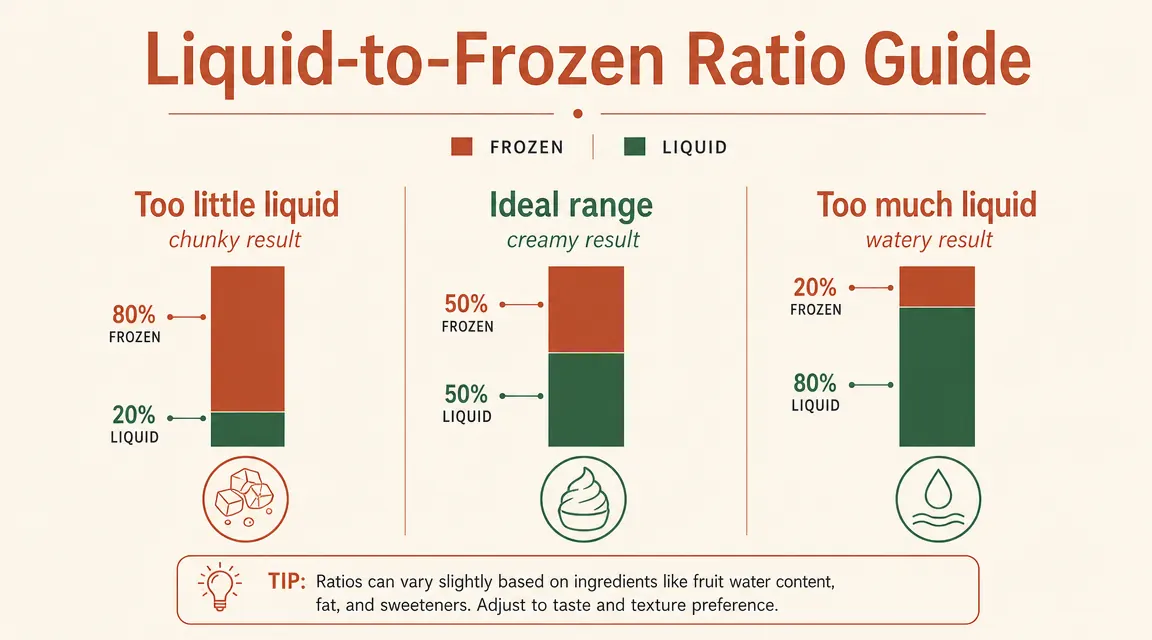
Three-quarters of a cup of frozen fruit in the Magic Bullet tall cup blends smooth in about 45 seconds. Fill it to the top and you are asking the motor to do something it was not designed for.
Step 4: Blend in Two Rounds, Not One Long Run
The Magic Bullet motor runs best in short bursts rather than one continuous 90-second cycle. I blend for about 20 seconds, then stop, flip the cup off the base, and give it a quick shake side to side. This moves any ingredients that have collected in the corners back toward the center. Then I flip it back on and run it for another 20 to 30 seconds. Two rounds of 20 to 30 seconds each produce a smoother result than one long run and they are also gentler on the motor over time.
When you stop and shake, do not open the cup. Just flip it off the base, shake it with the blade still sealed on top, and flip it back. This takes three seconds. You can also tap the base of the cup on the counter lightly to knock frozen bits loose before the second blend. After the second round, flip the cup off, remove the blade by unscrewing it carefully (the blade is sharp), and check the consistency. If there is still a chunk, add a tablespoon more liquid and do one more 15-second pulse.
Step 5: Swap the Blade for a Travel Lid and Drink From the Cup
This is the part that makes a personal blender actually worth having in a tiny kitchen. The Magic Bullet 11-Piece Set includes two kinds of to-go lids, both of which fit directly onto the blending cups. You unscrew the blade, screw on a lid, and your smoothie cup is now your drinking cup. No second glass to wash. No pouring and dripping on the counter. The 18 oz cup fits in a standard car cup holder and most bag pockets. This is the part I appreciate most on a weekday morning when I have about nine minutes to eat before leaving the apartment.
Cleanup is the other reason the drink-from-the-cup design wins. Rinse the cup, rinse the blade cup (carefully), and everything is done in under a minute. No blender carafe with a gasket to scrub, no disassembling a pitcher. I rinse mine right after drinking and leave it to dry next to the sink. On days I am not in a hurry, I do a quick wash with dish soap. The whole set fits in a ten-inch cabinet section.
What Else Helps
A few small habits make a consistent difference. First, let frozen fruit sit on the counter for three minutes before blending. Slightly thawed frozen fruit blends significantly easier than rock-hard straight-from-freezer fruit. You are not waiting for it to melt, just taking the edge off. Bananas are the easiest thing to freeze yourself: peel them, slice them into coins, and freeze in a zip-lock bag. Frozen banana adds creaminess that yogurt and ice cannot replicate, and it blends easily even in a personal blender.
Second, keep a dedicated smoothie bag in your freezer. I keep a gallon zip-lock with a mix of frozen strawberries, mango chunks, and banana coins. Every few days I refill from the fruit I buy fresh. Having a pre-mixed bag means every morning I just pour out a portion instead of hunting through three separate freezer bags. In a tiny kitchen where freezer space is also limited, this consolidation matters.
Third, if you are making smoothies for two people, the Magic Bullet 11-Piece Set comes with two cup sizes. The short cup is about 12 oz, the tall cup is 18 oz. Make each smoothie separately in its own cup. Trying to make a double batch by overfilling the tall cup is the main way to get a bad result. Two separate blends, two minutes of work, both cups go in the bags and you both drink from your own cup on the way out the door.
If you are curious how the Magic Bullet compares to the NutriBullet, which is made by the same company but runs a more powerful motor at a higher price, there is a full side-by-side in the Magic Bullet vs NutriBullet comparison. Short version: if your smoothies are mostly fresh fruit and greens, the Magic Bullet handles the job well. If you are doing leafy greens daily, lots of fibrous vegetables, or ice cubes (not frozen fruit), the NutriBullet's stronger motor is worth considering. For a broader breakdown of what I have used this blender for over a full year, including sauces and dressings, the Magic Bullet long-term review has the full picture.
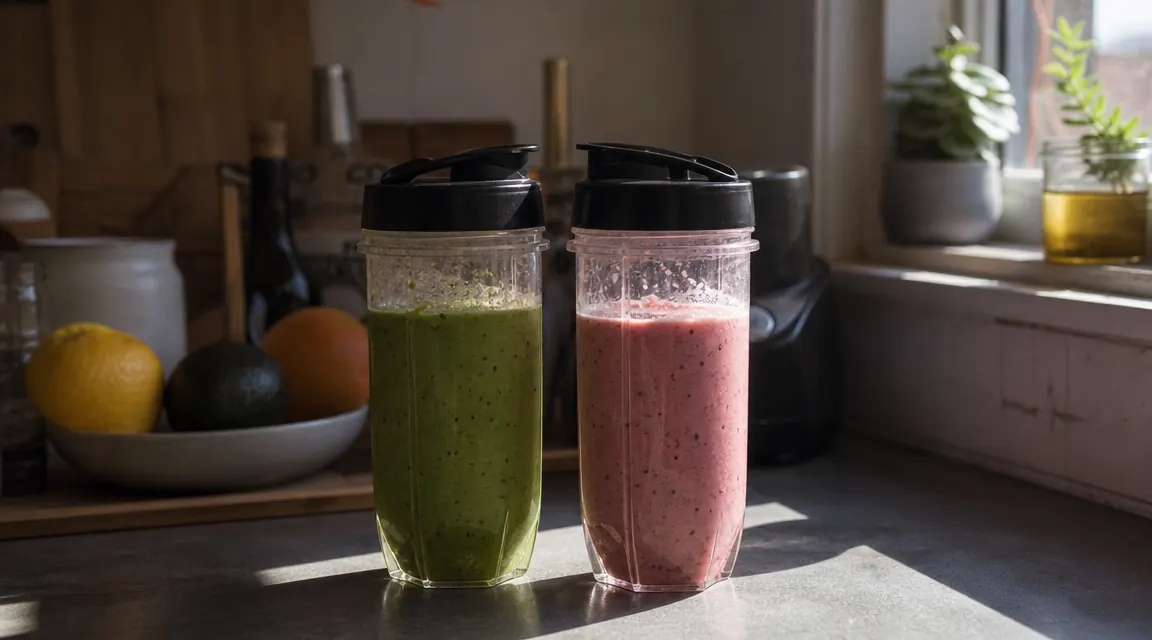
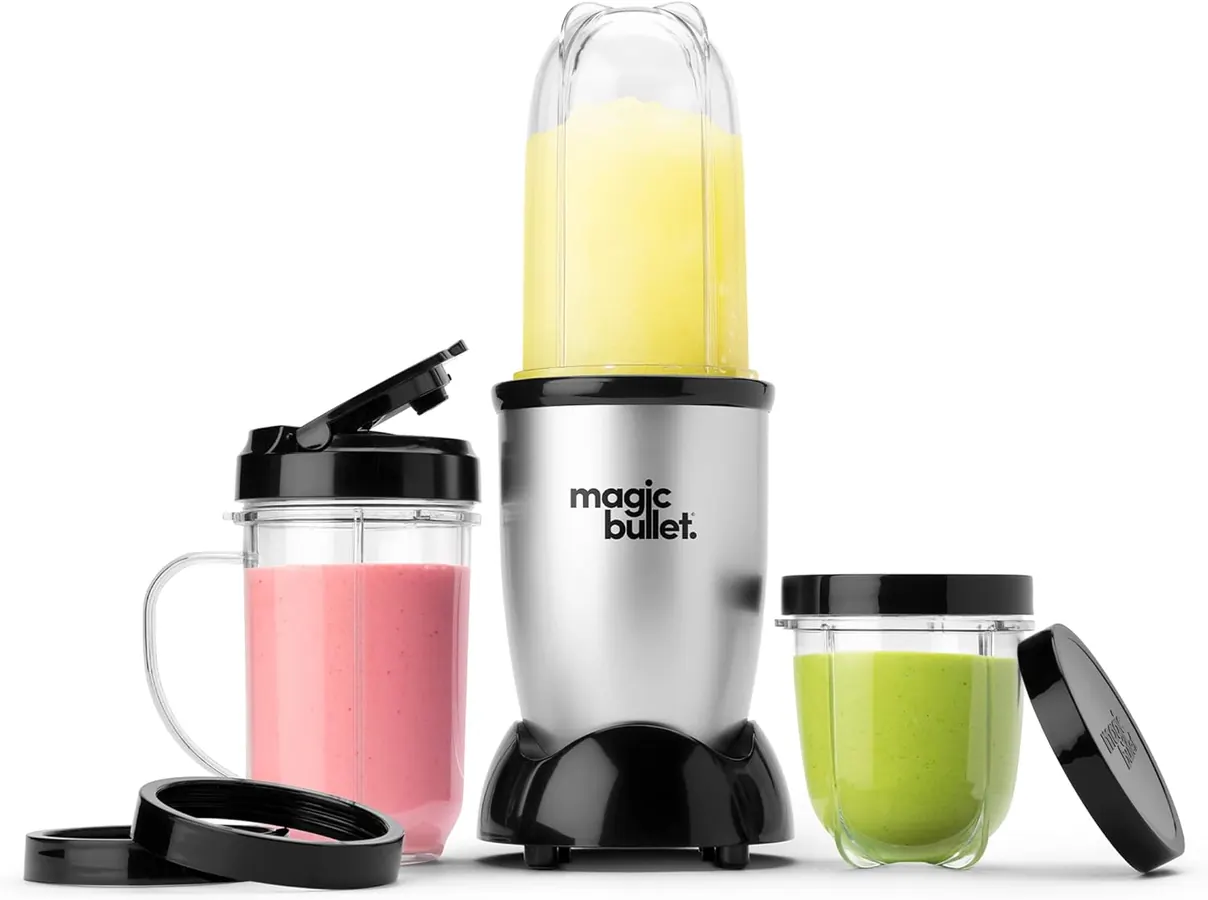
The Magic Bullet 11-Piece Set fits in a cabinet width of about four inches and cleans up in under a minute. If counter space is the constraint, this is what I reach for every morning.
Over 119,000 Amazon reviews and a 4.4-star rating. The 11-piece kit includes two cup sizes, to-go lids, and a blade set. Check today's price before you decide.
Amazon Check Today's Price on Amazon →